
What's wrong with these people?

Do you know that?
We hear these sentences from managers more and more often: „I don't know what's going on either. My employees are exhausted more quickly and at the same time annoyed, sick more often, more impatient, more dissatisfied - and sometimes it seems as if some of them have long since resigned internally. I can't even think about necessary change and team cohesion...“
This observation is not an isolated incident, nor is it an outlier in the system. It is a reflection of our times and a result of profound changes that are affecting people, their nervous systems, their expectations, and above all, their stress thresholds.
We are observing that owner-managed companies in particular are currently under double pressure: They have to navigate economically and at the same time ensure emotional stability while retaining employees and keeping costs under control. This balancing act is challenging because the world of work is changing faster than the culture of many organisations can keep up.
Hereby we would like to cast an insightful and understanding gaze upon the situation, for all those who are leading teams and seeking direction in these times. Because it's not about finding fault. It's about understanding, why people behave the way they do, and how management can once again create conditions in which employees do not have to protect, but want to shape. After all, personnel management is really not an easy thing in these times.

Why do people seem more thin-skinned and at the same time more burdened today than ever before?
We have been living in a state of constant collective tension for almost a decade. Pandemics, geopolitical conflicts, transformations, economic uncertainties and ever faster technological change are putting people under constant pressure. This constant stress is often underestimated. Many people arrive at work in the morning not „neutral“, but with a tense underlying tone.
From a psychological and neurobiological perspective, this is relevant: A tense basic tone makes people more reactive, more sensitive, but also exhausted more quickly. The emotional Resilience, that is actually needed right now is lower, cognitive resources are used up more quickly. And this leads to precisely the behavioural patterns that managers are observing today: Irritability, withdrawal, fatigue, less tolerance for ambiguity, less energy for new things.
If other stresses are then added in the corporate context - high pressure to perform, too few staff, an uncertain business situation, constant changes in priorities or unclear expectations - the result is an overlap of internal and external insecurity. It is this combination that throws many people „off balance“.
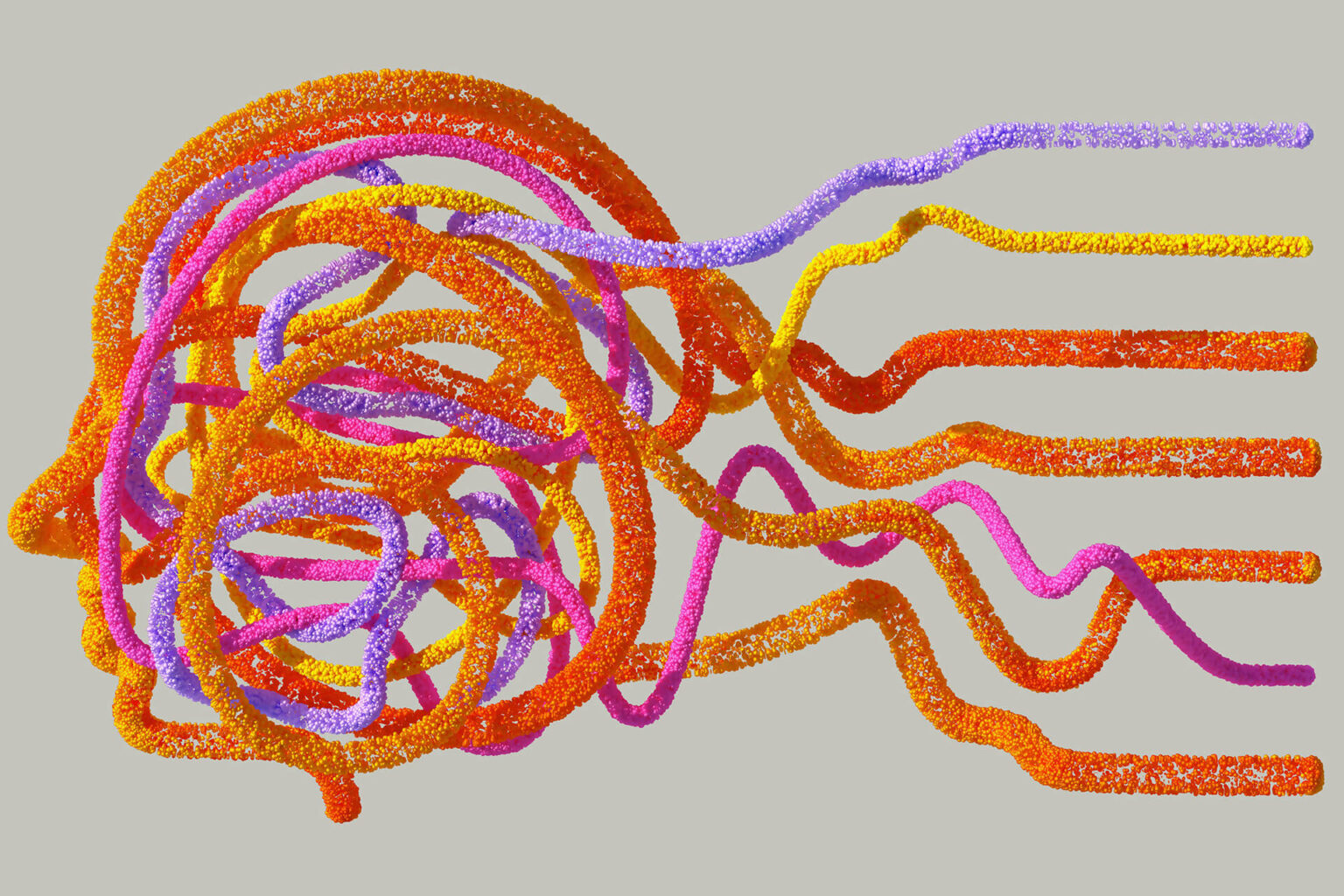
What does neurobiology reveal about the behaviour of people under pressure?
To understand the current dynamics, it is sufficient to look at a central principle of brain research: the brain does not differentiate between a real threat - such as a loud noise or a danger, the almost famous sabre-toothed tiger from prehistoric times - and a social threat, such as a lack of transparency, unpredictable decisions or conflicts within a team.
For the brain, uncertainty feels like danger.
As soon as this threat is perceived, the nervous system activates a protective reaction. The amygdala takes over and this leads to:
- limited problem solving,
- lower communication skills,
- increased willingness to engage in conflict,
- emotional instability,
- and a retreat into habitual patterns.
This is why we are currently seeing people in many teams who are not „less motivated“, but rather biologically slowed down. They are in a state in which their nervous system is shifting priorities: protection takes precedence over innovation. Caution takes precedence over responsibility. Retreat takes precedence over commitment.
This is important to understand. Not to excuse behaviour, but to classify it correctly.
Why are traditional management models no longer sufficient?
Many leaders continue to work with models that worked very well in a different era: clear directives, control, fixed hierarchies, little input. These patterns provide structure, but only when the underlying conditions are stable. In times of high uncertainty, the same models have a paradoxical effect: they increase ambiguity rather than reduce it.
When decisions are often communicated late, when employees have the feeling of being presented with a „fait accompli“ or when information is withheld from the system, the exact state that brain research describes arises in teams: Alarm.
Then what many managers observe happens: People interpret, speculate, withdraw or develop mistrust. This is not due to a „generation“, but to the way the nervous system processes threats.
In these situations, leadership needs less top-down control and more embedding. It needs to create meaning, provide direction, and contextualise uncertainty. Speaking systemically: it needs to practise relationship hygiene. Frequently, then, things are introduced which are intended to save the situation: „We've already introduced benefits, home office, flexible working hours, fruit basket, free drinks, sports programme... what else should we do?“

Inner cancellation, although you actually want to perform...
At first glance, inner resignation looks like a refusal to work. But if you look deeper, you realise that it is a protective reaction. People want to contribute, get involved, shape things. But they need two conditions to do so:
- Security / Connectedness - emotional and social stability, reliable processes, transparent decision-making and a culture that Mistakes not penalised.
- Sense - the feeling that one's own actions have meaning, that there is a goal that is greater than the daily burden.
If one of these elements is removed, the brain loses the motivation to invest energy. People then do what is necessary, but not what is possible. This is exactly what we call inner cancellation.
You can't motivate, you can only demotivate.
Many companies react to this phenomenon by trying to increase the pressure to perform or by creating incentive systems. But this reinforces the effect. What people need is not more pressure, but more connection and clarity.

What role does the home office play in these changes?
For many employees, working from home or mobile working was a relieving experience. It offered protection from micromanagement, interruptions or stress in overloaded office structures. But over time, a new dynamic emerged: distance promotes freedom, but it also promotes alienation. Those who have less insight into decisions feel less of a sense of belonging. And those who are less connected develop less of a bond.
Leadership at a distance therefore requires a high level of expertise in relationship management. An email is no substitute for a conversation. A status update is no substitute for orientation. And control over tools is no substitute for the feeling of travelling together.
The home office isn't the problem, but it makes visible where relationship patterns within the company are fragile.
And how to lead now?
Managers feel the pressure just as much as employees. Many bear responsibility for economic decisions while at the same time having to ensure emotional stability. This is demanding and requires a high degree of self-regulation.
Effective leadership in these times has less to do with „always being strong“ and more to do with awareness:
- How clear am I myself?
- How well can I categorise what is happening in my team?
- How well do I recognise the dynamics behind the behaviours?
From a systemic perspective, and this is an important view for us in our work, it is about visualising the patterns that are at work in the background. Teams today need managers who not only allocate tasks but also clarify meaning. Who don't just set goals, but provide orientation. Who don't just control, but actively shape relationships.
When leadership creates spaces in which people can express themselves without having to fear consequences, the result is psychological security. And psychological safety is one of the strongest predictors of performance.
Prevention - not an emotional luxury!
Traditionally, companies invest heavily in addressing the consequences, such as managing absences due to illness, stabilising teams after resignations, or costly recruitments. At the same time, comparatively little is invested in shaping the conditions that cause these problems in the first place.
This has long been proven: Good relationships, clear processes and modern leadership not only reduce absenteeism, but also increase innovation, productivity and loyalty. The shortage of skilled workers is not just a question of the labour market, but also a question of work culture.
Organisations that invest in prevention at an early stage relieve their system in the long term - emotionally and economically. Because people stay where they feel safe. And they get involved where they know that their work is important.

This is how our consulting concept supports companies that are now looking for orientation
Our approach combines neuroscientific findings with a systemic perspective. We do not view organisations as machines, but as social structures in which relationships form the foundation of performance. That is why we start with a look at culture: How is management organised? How are decisions made? What patterns of co-operation work in the team? What resources do the individual people have and how can they work together? Who takes on which role(s)?
Together with managers, we explore which habits have a stabilising effect - and which unintentionally increase stress. We help to create orientation, clarify expectations and open up spaces for genuine dialogue, to identify and deal with smouldering conflicts. The aim is not to make people „more efficient“, but to create conditions in which they become involved of their own accord.
We work with management teams to develop clear, neurobiologically based management routines: Dialogue formats, transparent decision-making processes, meaningful communication, delegation skills and a culture that recognises overload at an early stage. In many organisations, this re-establishes the foundations that are so necessary in turbulent times: Stability, trust, solidarity.
What does this mean for the future of work and the role of leadership?
The question „What's wrong with people?“ is actually a question about the system. People don't change their behaviour randomly. They react to the conditions they find themselves in. Those who understand these conditions can shape them, and that's what makes the difference between an organisation that collapses in crises and one that grows because of them.
Leadership today does not need more rigour, nor „social nostalgia“, but more awareness. Not more control, but more clarity. Not more „management“, but more relationship building. This change requires courage, but it is worth it. Because companies that create an environment in which people feel safe and can grow become places where performance and humanity are not contradictory.

If you are looking for orientation on this path...
...we are happy to accompany you. With a systemic view, a neuroscientific focus and the aim of jointly creating conditions in which people can remain healthy, teams can work stably and organisations can become resilient.
Contact us now without obligation.
Book tip: „Leadership with brains“ by Sebastian Purps-Pardigol
„Leading with brains“ is a valuable book for anyone who wants to rethink leadership in uncertain times. Purps-Pardigol combines findings from modern brain research with practical insights from over 150 company interviews.
FAQ: What can leadership achieve?
What can cause people in teams to be more sensitive or reactive than usual?
-
The heightened sensitivity of many employees is often less a personality trait than a consequence of chronic stress. Constant uncertainty - both privately and professionally - activates the nervous system and reduces the capacity for frustration tolerance, social complexity and cognitive flexibility. As a result, people appear irritable more quickly, even though they are actually exhausted.
Why do classic management tools such as control, clear announcements and tight deadlines seem to work less well today than they used to?
-
Paradoxically, these instruments generate more uncertainty in unstable times. The brain interprets a lack of involvement or opaque decisions as a threat. In a tense world, old control patterns therefore act as stress amplifiers, not as guidance.
How do you recognise the difference between dissatisfaction and genuine inner resignation? Is it even possible?
-
Inner resignation is not a low mood, but a loss of the psychological contract. People continue to do their work but have lost their emotional connection to the company. Distance, lack of initiative and withdrawal from social interactions are typical. The decisive marker: it is not the energy that is low, but the relationship that has ended internally.
Why are mental illnesses and exhaustion increasing at an above-average rate in SMEs in particular?
-
Many medium-sized companies work with a high level of identification, but also with a fast pace, limited resources and poorly structured communication channels. When a lot of change takes place with little transparent orientation at the same time, a field of tension arises that the nervous system can barely regulate. The result: overload, conflicts and ultimately breakdowns. However, even large companies are not protected from this.
What role does a lack of transparency play in the mental health of employees?
-
Transparency is a neurobiological safety factor. When people understand why something is happening, the brain can comprehend threats. In the absence of this orientation, fantasy arises, and fantasy is almost always more threatening than reality. A lack of transparency is one of the strongest known drivers of stress in organisations.
Why is working from home or mobile working often perceived as pleasant, but at the same time as a risk of loss of commitment?
-
Working from home reduces social overstimulation and control stress, but offers fewer informal points of contact that are important for a sense of connection. If these micro-encounters are missing, autonomy is maintained, but belonging decreases. Without consciously organised relationship management, an „emotional vacuum“ is created that weakens the bond.
What can managers do if employees are noticeably overworked but don't ask for help?
-
Most people signal stress indirectly - through withdrawal, mistakes, irritable communication or a drop in performance. Systemically, it makes sense to have a conversation that doesn't „treat“ but rather invites: „I recognise ... and would like to ask what you need right now.“ Overload cannot be solved by an offer, but through relationship and orientation.
Why does meaningfulness play a greater role today than it did 20 years ago?
-
We live in a knowledge and transformation society where work is no longer just a duty but a space for identity. The brain reacts positively when it recognises meaning and releases dopamine, which strengthens motivation. Meaninglessness, on the other hand, creates stress because the nervous system finds no reason to invest energy. This means it is helpful when organisations work concretely and comprehensibly on their purpose, mission, and vision in their daily business.
How can trust be rebuilt when it has been damaged by crises or decisions?
-
Trust is not built through announcements, but through repeated behaviour. This means: categorising what has happened. Making transparent how decisions will be made in future. And consistently demonstrating that participation, clarity and reliability apply again. Trust is not a feeling, but a pattern that needs to be built up.
What is the most important lever for sustainably strengthening mental health and performance in the company?
-
The combination of relationship, clarity, and co-creation. People need to feel seen, however trite that may sound, that they understand what's happening, and that they have influence. All three factors have a neurobiologically stabilising effect. If one is missing, the system tips over – first psychologically, then organisationally.

First exchange
Free introductory meeting
Some topics are best understood through direct discussion.
I'm happy to take the time for an initial, confidential conversation.
This might also interest you
 Organisational development
 Between change fatigue and urgency: How companies can develop their implementation muscle.

 Organisational development